
Dear friends, sponsors, and stakeholders of the Ton Memorial School Sailung Foundation,
We would like to inform you about the latest developments regarding our projects in Sailung, Nepal. The past few months have been marked by growth, new plans, and great results in both education and sustainable agriculture. Thanks to your support, we can continue building a future with more opportunities for the community of Sailung together.
Strong results at school
School development in Sailung continues to proceed impressively. The exam results of April 2026 show that the quality of education continues to rise:
• Class 5 achieved the best results in the region
• Of the 17 students in Class 8, 15 passed immediately.
• The school achieved a 3rd place in the regional comparison
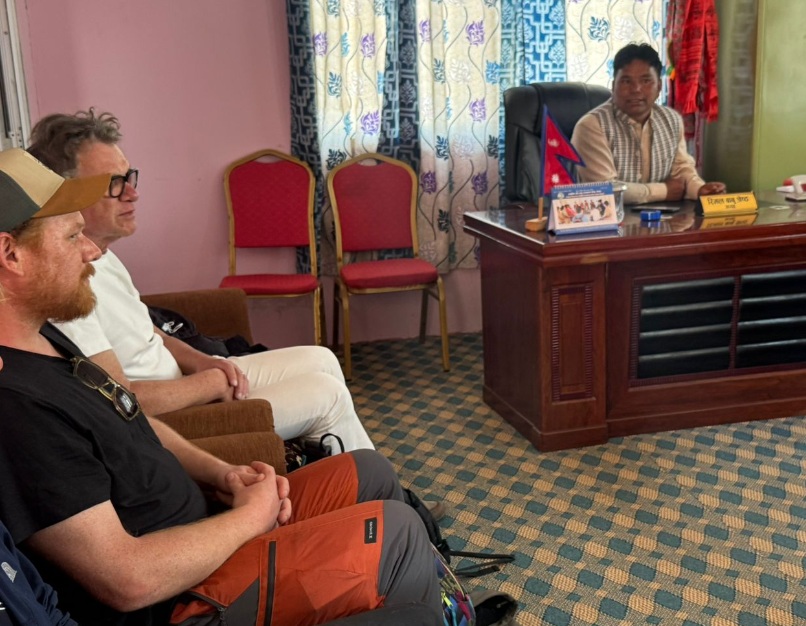
During a visit by representatives of the local government (VDC) and the education inspectorate, great appreciation was expressed for the development of the school and the quality of education.
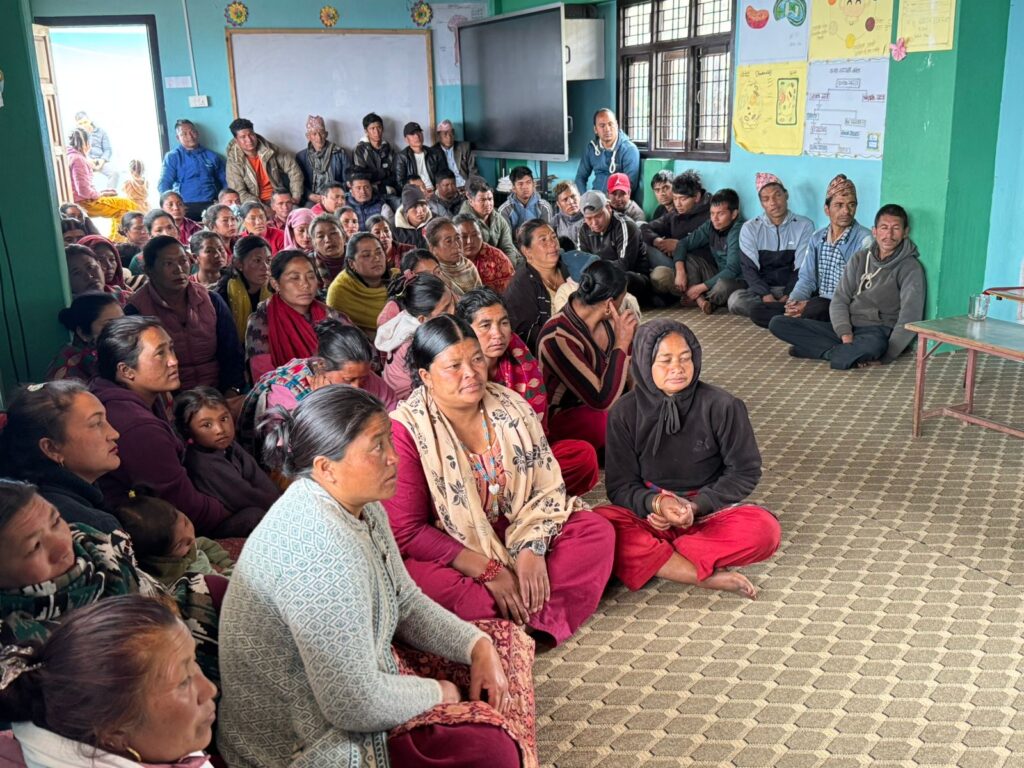
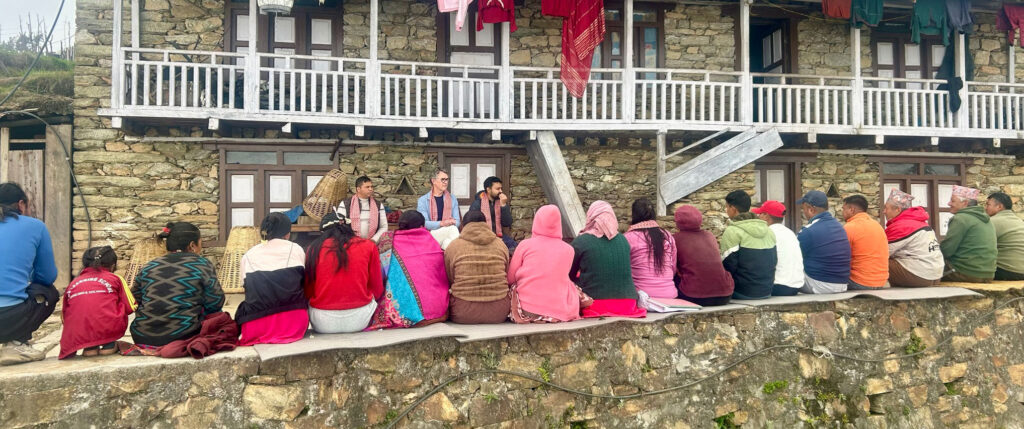
By now, the school counts 143 students and it was decided by VDC, after consultation with parents (photo above), to expand the school with Class 9 and 10. This allows pupils in Sailung to full secondary education to follow up locally. There is a strong desire for this within the community. At the same time, this expansion requires additional land, classrooms, and teachers.
Although the foundation currently prioritizes agricultural projects and the further sustainability of the community financially, we remain actively involved in considering possible solutions and support for the longer term.
Jan Schouw's Travel Report: between Kathmandu and Sailung
My trip to Nepal was an encounter with people, projects, landscapes, and stories. In this report, I take you along on the impressions, conversations, and moments that have stayed with me.
First impressions of Kathmandu
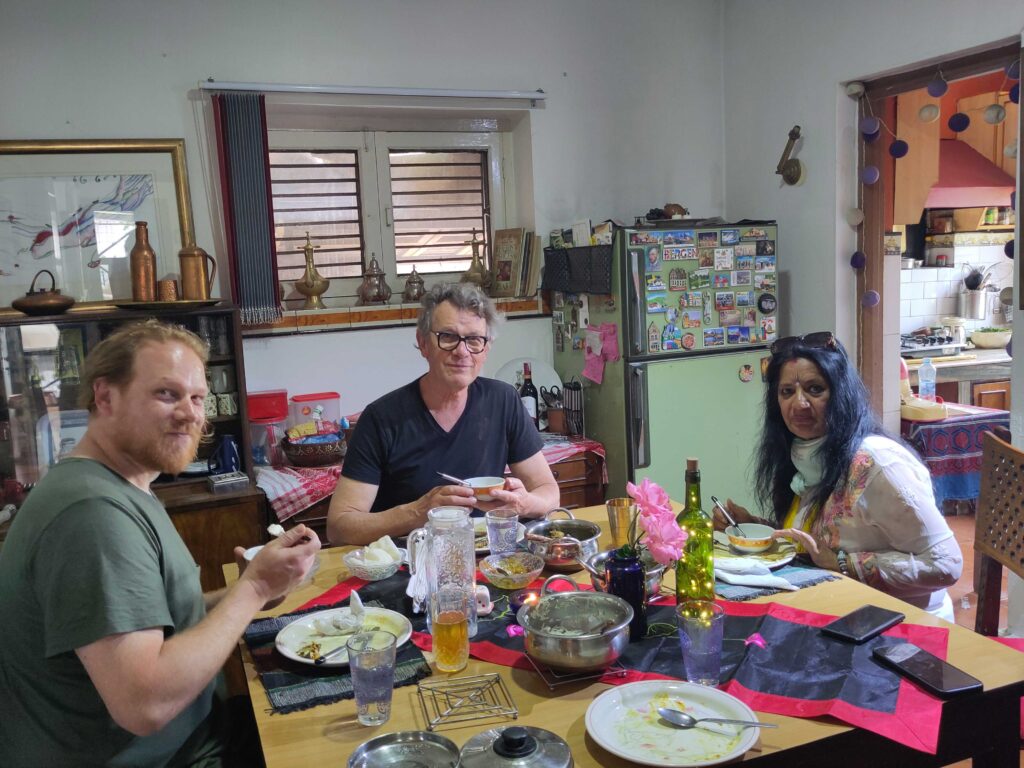
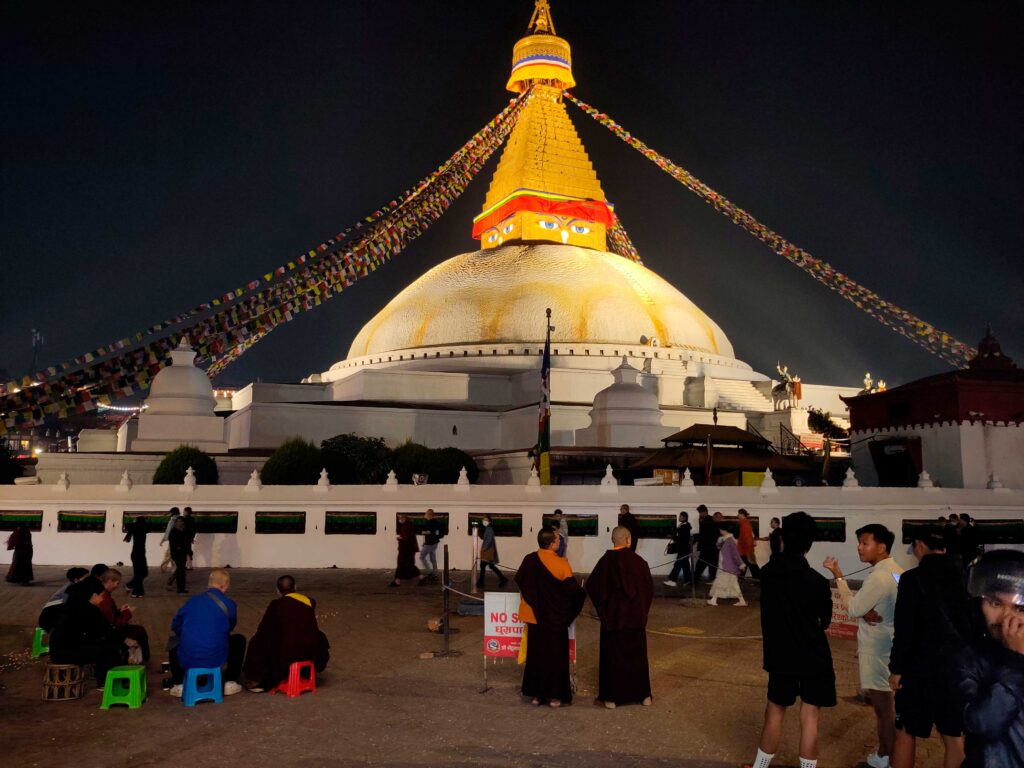
In April, I traveled to Nepal with my son Bram. We started in Kathmandu, a city that cannot really be captured in a few words. Yet, you quickly arrive at images such as colorful, chaotic, lively, tolerant, and sometimes surprisingly serene. At the same time, there is heavy air pollution that you constantly feel. In Kathmandu, we visited the office of our partner ISARD, where we discussed the SATSh and SIF projects. On April 14, New Year's Day in Nepal, we were invited by our foundation's Nepalese friend, an artist. Ragini Upadhyaya, Ragini Upadhyaya – Wikipedia. We had lunch at her home and had wonderful conversations with her and her assistant, including about the recent protests and the political upheaval in Nepal.
On the way to Sailung
On the third day, we set off towards Sailung together with Bivas Neupane, Director of ISARD. As soon as we left Kathmandu behind, the sky turned lighter, both literally and figuratively. Along the way, the landscape changed visibly: more greenery, rugged forms, and fewer buildings. The final kilometers were at a snail's pace over poor roads. It was precisely there that the feeling began to set in that we were truly entering a different rhythm, in an area where nature and the weather gods still clearly set the tone.
A warm welcome to Sailung
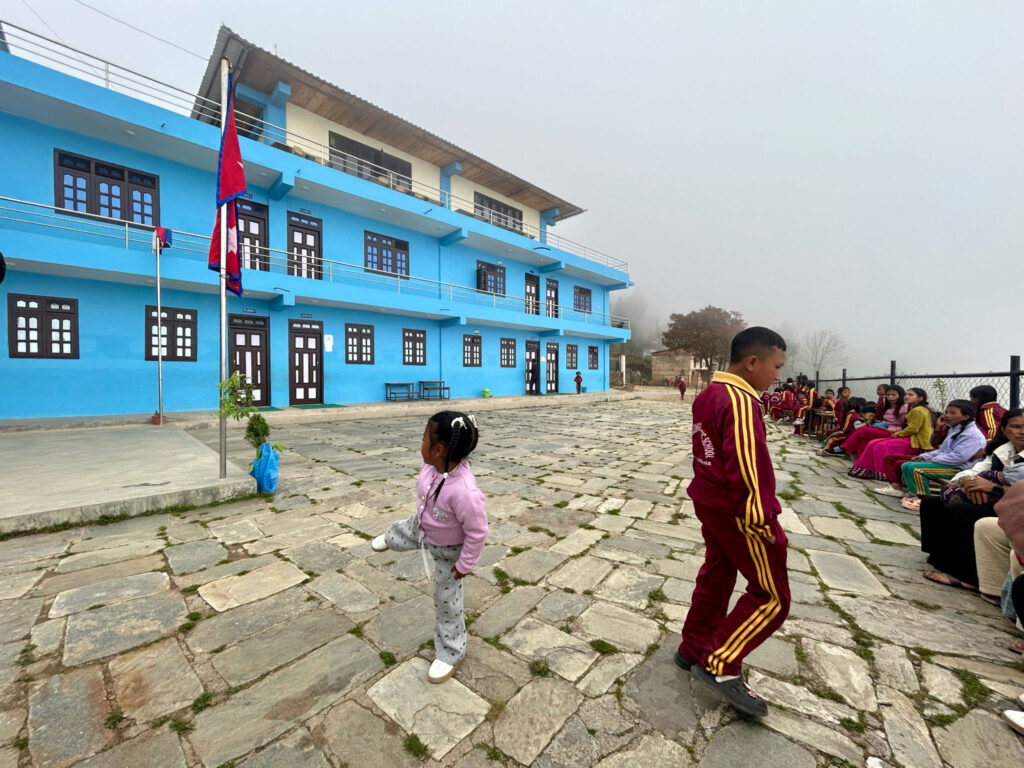
Once at Sailung, it felt surprisingly familiar, as if we had been here before. Krishna and his family gave us a particularly warm welcome, and in everything we noticed that we were truly welcome. There were also a few students staying there from Engineers Without Borders, who have already been briefly mentioned in previous newsletters. They were working higher up the mountain on a water reservoir. Our stay was mainly focused on visits to the agricultural project, the health center, and of course, the school. We could see it from afar: a blue building in the landscape. The school makes a well-maintained impression. The classrooms are colorful and convey that learning here is taken seriously and done with attention. The administration also turned out to be well organized. Krishna showed us how he oversees the organization and bookkeeping. That gave me a lot of confidence: we can let go of the 'school' project with peace of mind.
What the agricultural project visibly changes
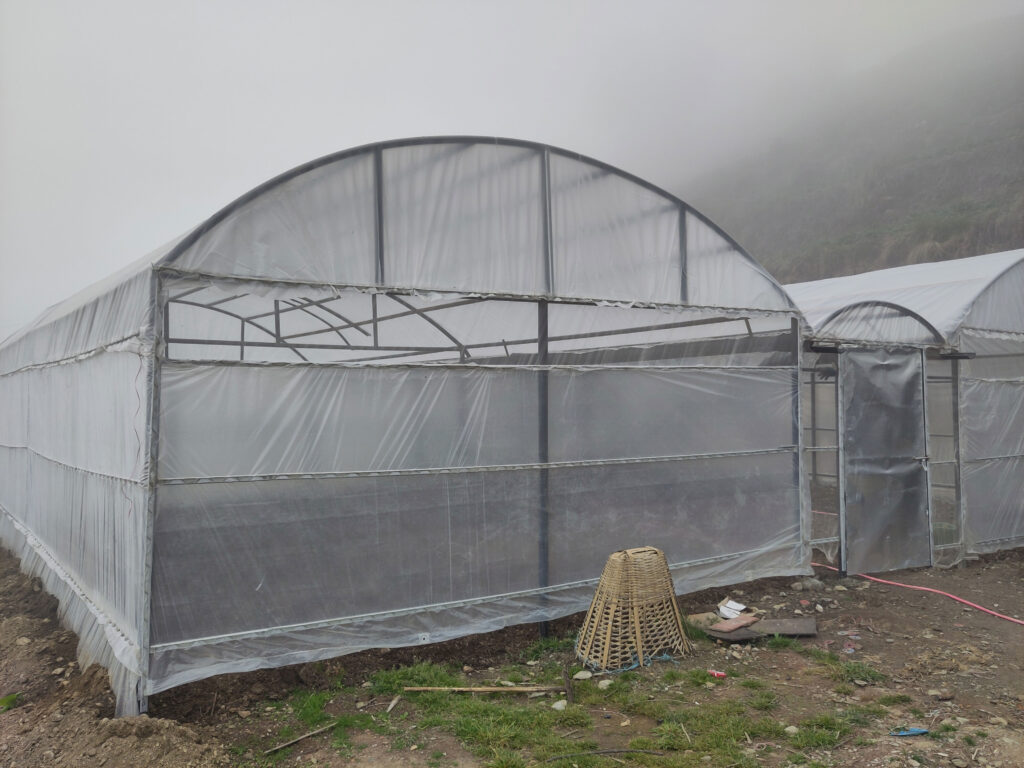
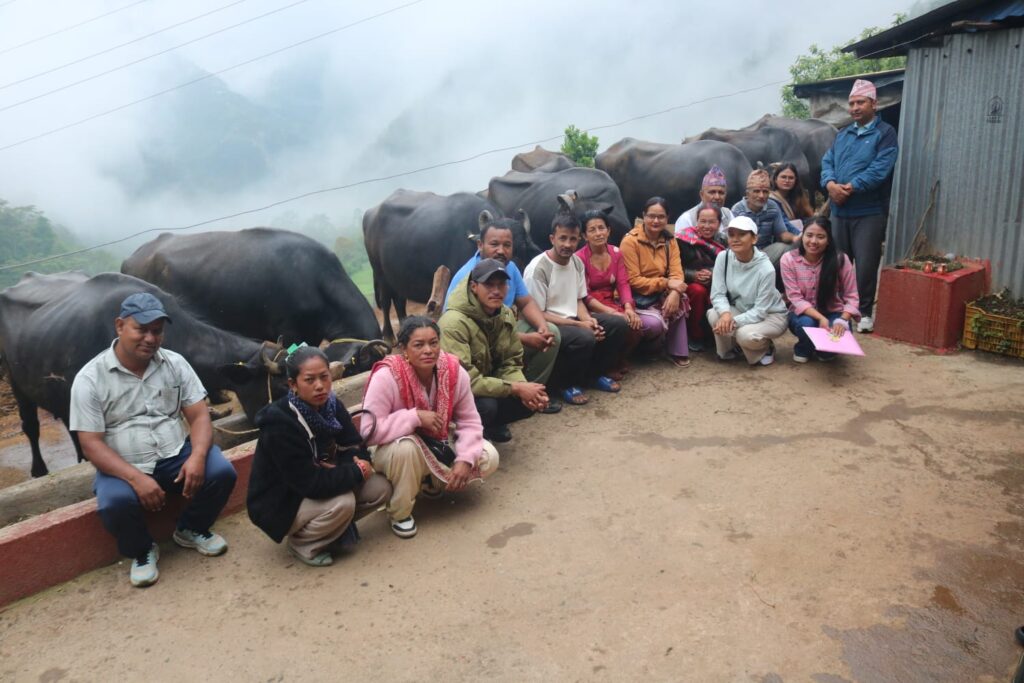
The guided walking tours along the various parts of the agricultural project, led by Bivas, made a great impression. The small greenhouses stood out in particular. You can now see them in many places in the surrounding area. Part of this is financed by the project, but at least as important is that people are now also investing in new greenhouses themselves. That says a lot: the added value is crystal clear to them. Thanks to the greenhouses, they can vary more in what they grow. This not only leads to higher income but also to reduced vulnerability, as they are less dependent on a small number of crops. In addition, the terraces in open-field cultivation stood out: a beautiful mosaic of horizontal planes against steep slopes. At the same time, it also raised questions. Potatoes are grown everywhere, and that makes the area vulnerable should a disease ever break out.
A look inside the saving group
One of the most interesting meetings was with a so-called saving group. The participants in the agricultural project are divided into groups in which they not only learn about new crops and working methods, but also save together. A portion of their income goes into a joint fund, from which small loans can subsequently be provided. I was able to attend a meeting where loans were repaid and new loans were granted. Everything proceeded in a remarkably structured manner and, as far as I could see, also in good harmony. Naturally, I could not follow the content of the conversations, but thanks to translations and body language, much became clear. It is precisely here that I see a good foundation to build further on our SIF idea (see further in this newsletter).
An official afternoon with a personal moment
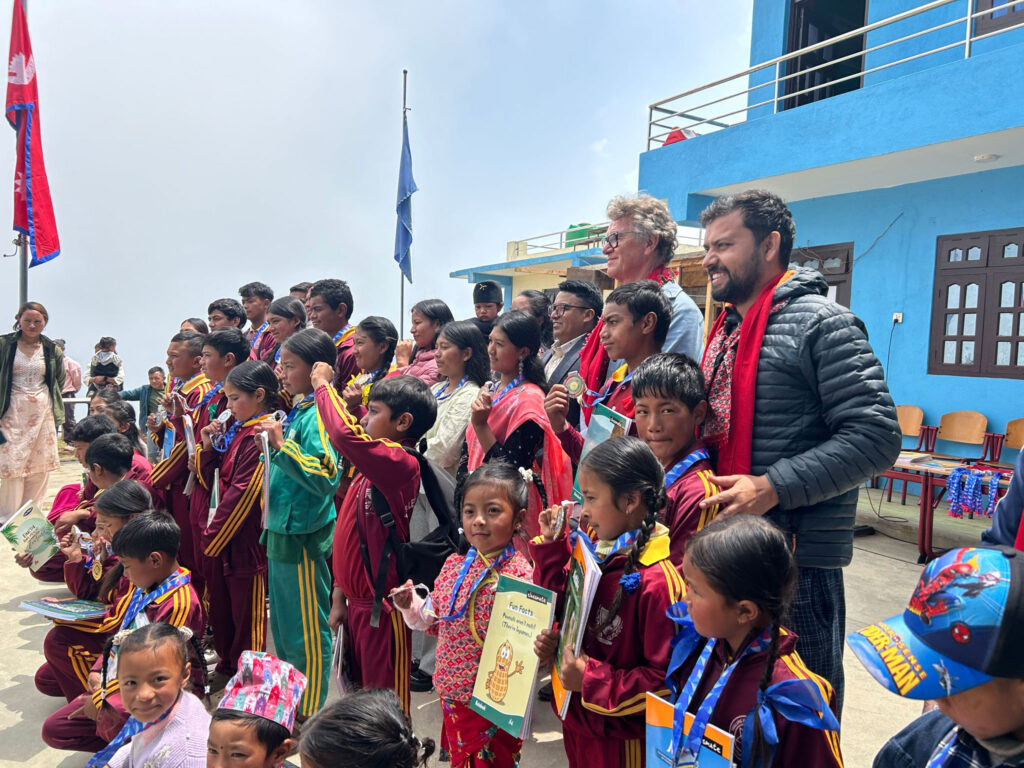
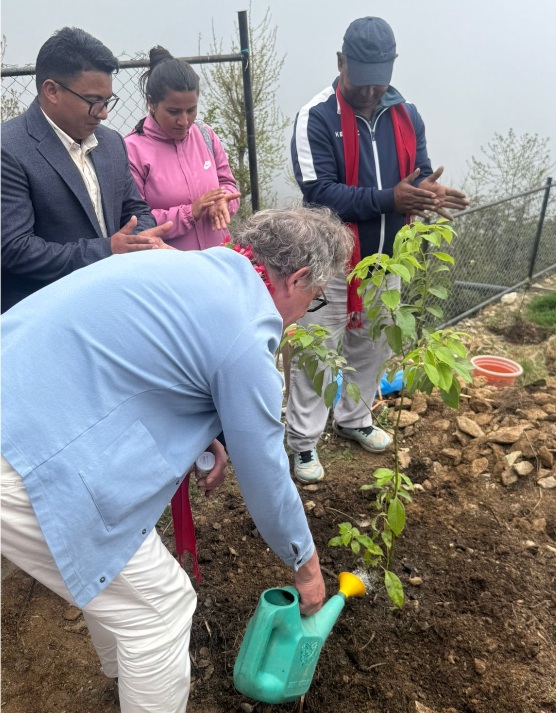
A very formal afternoon followed at school. A large group of students was present, along with all the teachers and the school board. There was music, dancing, speeches were given, and various prizes were awarded. I had the honor of presenting some of those prizes and saying a few words myself. The most special moment for me was planting a camphor tree. That was the gift from our foundation to Valentijn, Ton's grandson, who was born in February. I had been given some of Ton's cremation ashes and scattered them at the bottom of the planting hole. It was an intense and meaningful moment, in which past, present, and future came together in a very tangible way.
Looking back and looking forward
On the return journey, we spoke with the regional administrator and several district administrators. They expressed their appreciation for our activities, with particular attention to the agricultural project. At the same time, they pointed out a greater challenge: agriculture sustains the area but does not yet provide sufficient employment to prevent rural depopulation. That is precisely where an important question for the future lies.
Back in Kathmandu, we took the time to let the first impressions sink in. Together with Bivas, we also discussed what next steps are conceivable for Sailung and what role ISARD can play in this.
Finally, we ended up in the neighborhood. Thamel, Thamel – Wikipedia. To be honest, it reminded me a bit of Valkenburg in Nepal: lively, touristy, and clearly geared towards Western visitors. But that also had its advantages, because there were souvenirs in abundance. And yes, we were happy to take advantage of that.
This trip showed once again how wonderful personal contact is. Ultimately, projects are not just about buildings, agriculture, or finances, but above all about people, trust, and collaboration. We look back on these days in Nepal with gratitude and take away many thoughts and inspiration for the next steps.
SATSH agricultural project expands further, 2026-2027 program launched
The sustainable agriculture project SATSH (Sustainable Agriculture Transformation Sailung) is further developing into an important foundation for the community.
Great results have been achieved again in the past period:
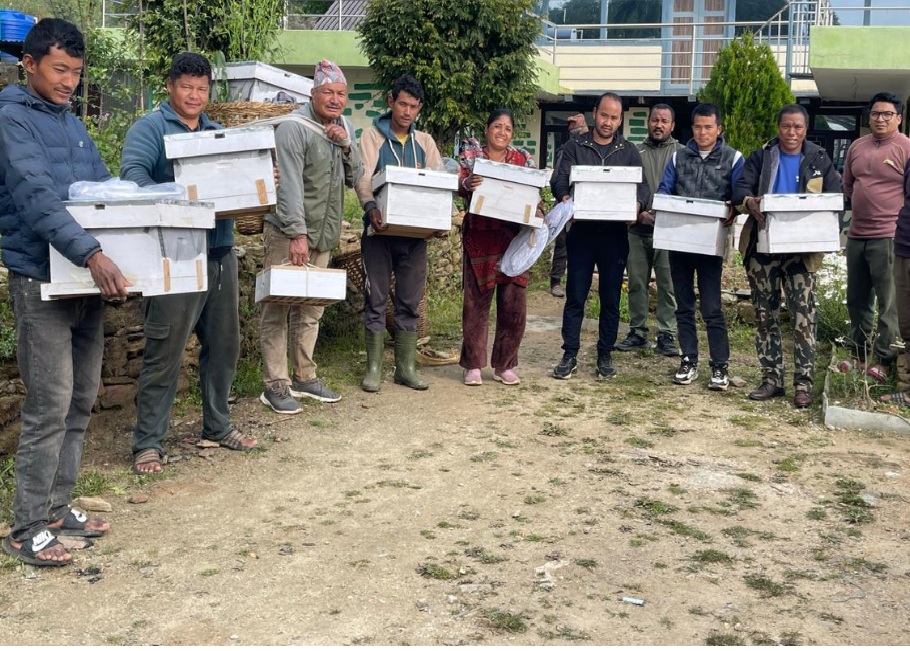
• expansion of tunnel and greenhouse cultivation
• further professionalization of farmers' organizations
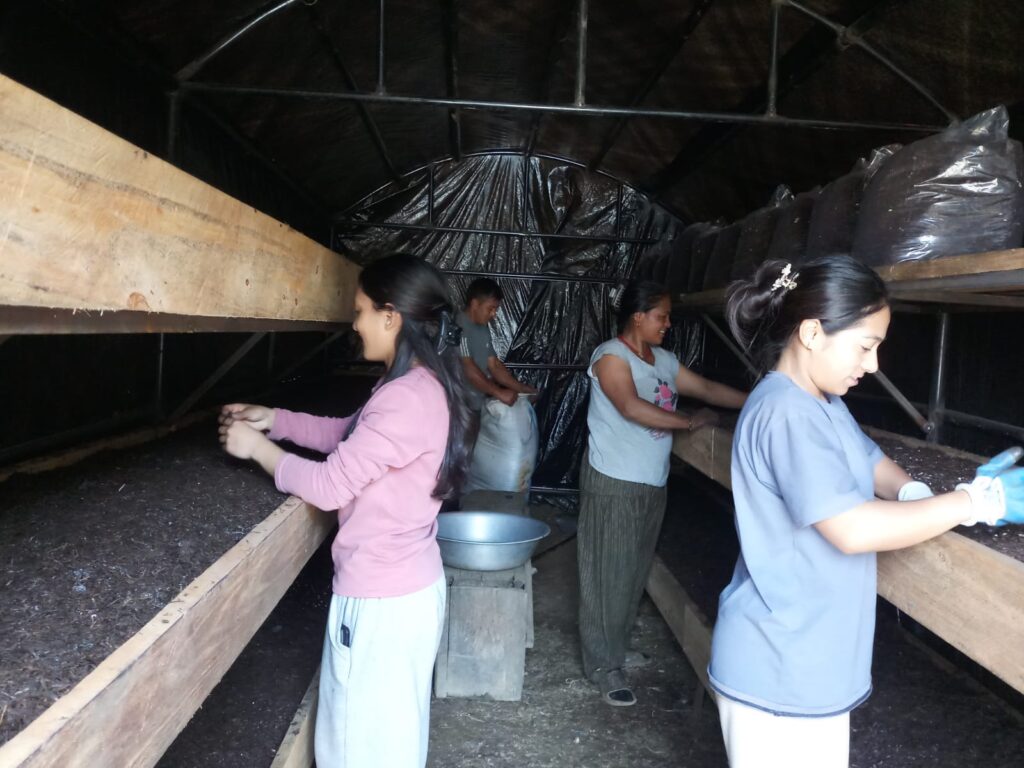
• successful application of composting and sustainable cultivation methods
• growing local collaboration and knowledge sharing through company visits
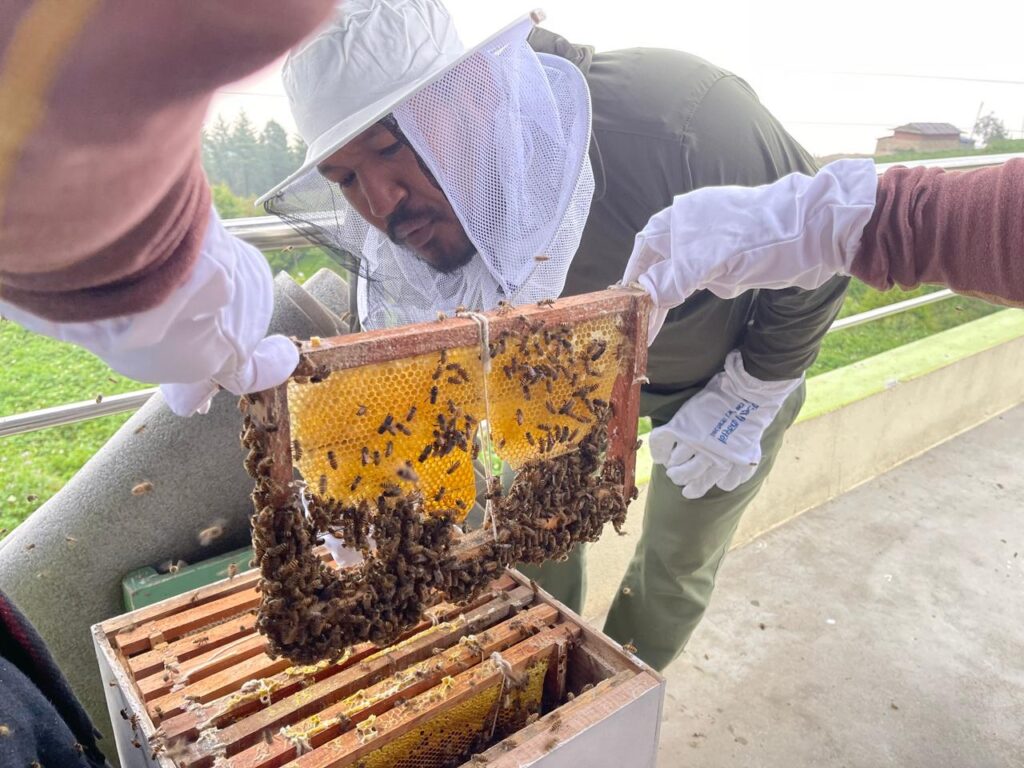
• And that even beekeeping is going well at an altitude of 2,500 meters.
The families indicate that their income position is improving and that they are gaining more confidence to invest in their future themselves.
We are pleased to report that, thanks to the many donations, we have already been able to proceed with the final phase of the SATSh project.
New step: Sailung Impact Fund (SIF)
In addition to the ongoing projects, the foundation is collaborating with ISARD on the next phase: establishing the Sailung Impact Fund (SIF).
The idea behind SIF is to develop a local fund that enables sustainable investments for farmers and small entrepreneurs in Sailung. This involves exploring a combination of loans, investments, and local guidance.
During recent discussions in Nepal, it became apparent that there is significant local enthusiasm for this initiative. It is also being investigated whether official pilot status is possible for this within the Nepalese Ministry of Finance. The Board has agreed to further develop these possibilities.
The ultimate goal is to make the community increasingly self-reliant and economically stronger. And thereby independent of external support.
Thanks to our sponsors and stakeholders
We are enormously grateful for all the support we receive — from child sponsors, private donors, the Van Helden Tucker Foundation, the Hofstee Foundation, Rotary Clubs, Wilde Ganzen, and many others who make our work possible.
The positive responses to our previous newsletters and campaigns have once again demonstrated the level of engagement. Thanks in part to you, we can continue to invest in education, sustainable agriculture, and future prospects for the Sailung community.
Outlook
In the coming months, we will focus on:
– further completion of SATSH 2026-2027
– elaboration of the Sailung Impact Fund
– further professionalization of the school
– strengthening local autonomy
We hope to be able to keep you informed of these special developments in the coming period as well.
On behalf of the board of the Ton Memorial School Sailung Foundation, we sincerely thank you for your trust and involvement.
Namaste,
Jan Post
Chairman of the Ton Memorial School Foundation Sailung
Together we are building education, health, and sustainable development in Sailung.
IBAN: NL54 ABNA 0840 3644 23
BIC: ABNANL2A
In the name of: St. Ton Memorial School Sailung
Your donation is tax deductible (ANBI)
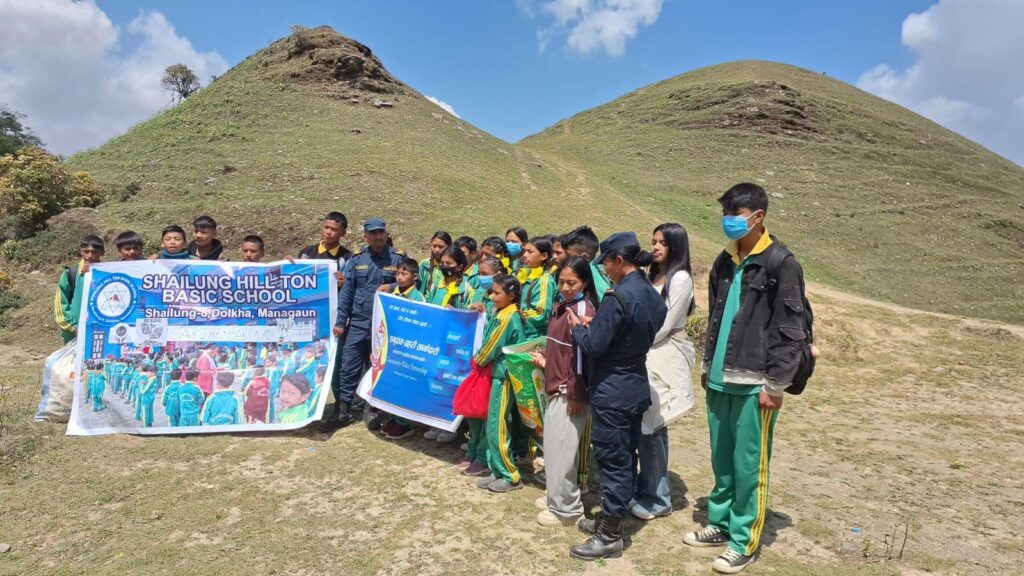
On behalf of all children, families and the team:
Thank you for the change you have initiated.
Visit Rob and Rian
Then we almost forget Rob and Rian's visit report.
Visit to Sailung March 2026
Rian Bekkers and Rob Bonte
Allow me to introduce myself: Rian has been a Nepal fan for many years. In 2018, she went on a trek in Nepal for the second time and met Ton and Marcel there. During that trek, the tragic accident occurred in which Ton, in whose name the foundation was established, lost his life. This intensely sad event led to a strong sense of connection between her and her husband Rob and the people surrounding the Ton Memorial School in Sailung and the foundation in the Netherlands. Eight years later, we visited Sailung and the surrounding area.
We were given a very warm welcome there at an altitude of 2,500 meters in the cold by Krishna and his lovely family, and we are truly enormously impressed by what the people in Managaun have accomplished in eight years with the support of the foundation. What stands out is the solidarity and perseverance with which the people are working on the development of their area. The conditions are harsh: extremely steep, erosion-prone slopes, cold, the consequences of recurring earthquakes, and difficult accessibility due to poor roads. The latter is certainly the case during the monsoon season, when many roads sustain damage annually.
In Managaun, they have managed to find 'the way up' in recent years. The school looks perfect, as does the medical center. And now there is the agricultural project (Agriculture – Ton Memorial School Sailung), providing over 180 families with a much broader livelihood. Among other things, a wide variety of vegetables are now being grown in newly built greenhouses, in addition to traditional crops such as potatoes, which can be sold at the market. We admire agricultural advisor Anita from ISARD, who has lived in Sailung for the past few years to successfully transfer her knowledge and experience to the farmers in the village. The newest addition is the tree project. These are all top-notch development projects: started from local initiatives and requests, supplemented with knowledge from both Nepalese and foreign institutions, and a financial boost from the foundation. The 'real' work—building, maintenance, and management—is carried out by the local community, which makes decisions through mutual consultation regarding what constitutes a sensible next step in development.
It was not only educational and inspiring to be in Sailung, but also really fun and enjoyable. Staying with Krishna, his wife Shanti, and daughters Ruthy and Gracey was super cozy. In Nepal, it is customary to address friends as family, and so we were suddenly Aunty and Uncle and Grandpa and Grandma.
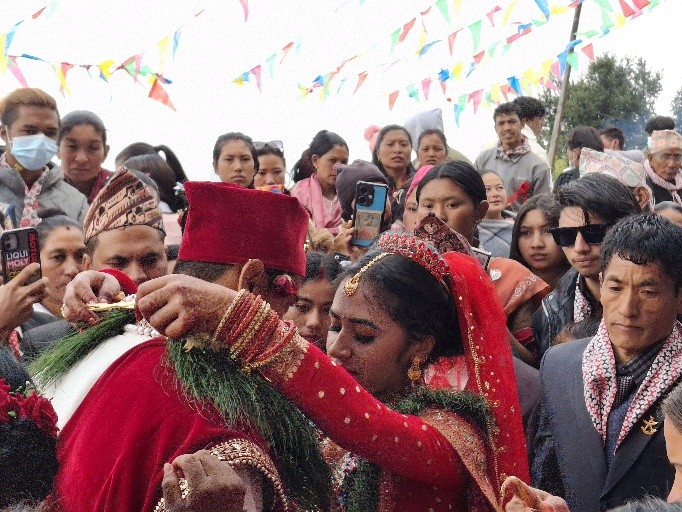
We struck gold, because on the second day of our visit there was a Hindu wedding in the village to which everyone was invited. Typical of Nepalese hospitality was that we were also very welcome there and truly felt that our visit was appreciated.
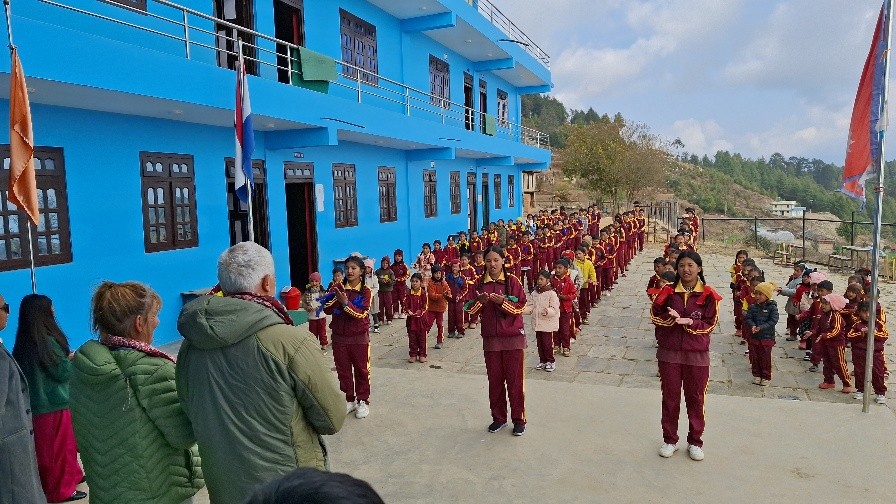
Krishna organized a visit to and tour of the school. To our surprise, we were serenaded by the children of the school. We enjoyed it immensely and it made us a little shy.
Reception by the children of the school, the impressive morning ceremony
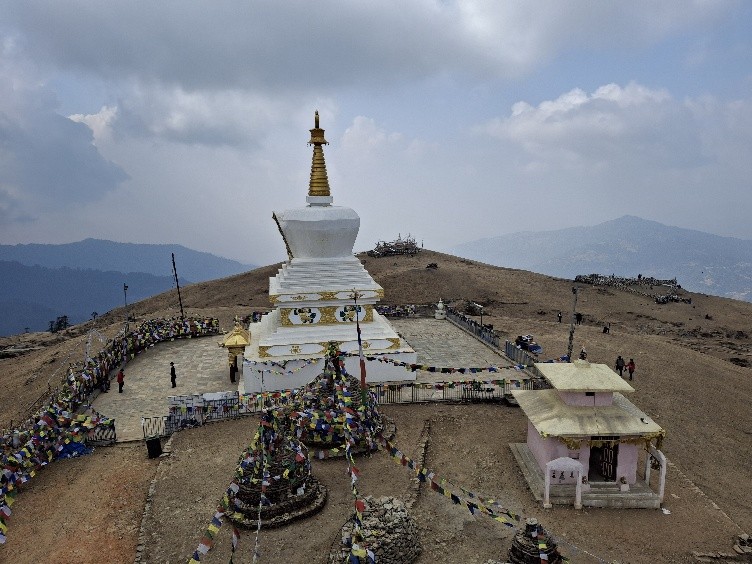
Gopy is a family friend who has helped organize various projects. He is also an organizer and guide for treks, and is currently starting this up in the beautiful surroundings of Sailung. We were his first Western clients and trekked with him and our lovely porter, Ghonga, for four days through the beautiful surroundings. Ghonga has lived in the area his entire sixty-year life and is a very social and friendly person with a great sense of humor; we felt a strong connection, even though he does not speak English. He knew almost everyone in the wider area, and through him and Gopy's translations, we chatted with many people we met along the way and learned a lot about the different ethnic groups and their customs, such as the Newar, Tamang, and Sherpa. Many women, in particular, still wear the beautiful, colorful traditional clothing or modern variations thereof. Along the way, we stayed in a very cozy 'teahouse' and in a small hotel at the foot of 'Sailung Hill,' a mountain of 3,100 meters (which, in the eyes of the Nepalese, is a hill).
The Sailung Hill holds palpable spiritual value for Buddhists, Hindus, and in Shamanism, and is frequently visited by Nepalese and Indian tourists. However, even we, as the only Western tourists there, were very welcome, and photos were exchanged with great enthusiasm. A trek in the Sailung area is highly recommended and offers a unique alternative to one of the more well-known treks.
In short: our visit to Sailung was an unforgettable experience that leaves us with indelible, warm memories.